Solar Lease vs Buy in 2026: Which Option Saves You More?
Short answer: if you can pay cash or get a fair loan, buying solar usually gives you the most savings over the life of the system, plus a home upgrade you own outright. A lease or power purchase agreement (PPA) can still make sense in 2026 if you want little or nothing down, don’t want to handle repairs, or can’t use a tax credit anyway. The big change this year is that the 30% federal credit for homeowners who buy is gone, while companies that own leased systems may still claim a business credit. That shifts the math, so compare real quotes side by side.
What is the difference between a solar lease, a PPA, and buying?
When you buy, with cash or a loan, you own the panels. Every kilowatt-hour they make is yours, and you’re responsible for upkeep after the installer’s warranty runs out.
With a lease, a solar company owns the system on your roof and you pay a set monthly amount to use it. With a PPA, the company also owns the system, but you pay for the electricity it produces, usually at a fixed rate per kilowatt-hour. In both cases, as Solar United Neighbors puts it, a third party owns the system, and that owner handles operations and maintenance.
How did the 2026 tax credit change affect lease vs buy?
Until the end of 2025, homeowners who bought a system could claim the 30% Residential Clean Energy Credit. The IRS says that credit isn’t allowed for expenditures made after December 31, 2025, and an expense counts as made when installation is completed. So if your panels go up in 2026, you can’t claim it, even if you paid a deposit last year.
Leased and PPA systems work differently. The company that owns them files under a separate business credit, Section 48E. Under the current statute, that credit ends for solar property placed in service after December 31, 2027, and IRS Notice 2025-42 explains that the cutoff applies to projects that began construction after July 4, 2026. The same 2025 law added a leasing restriction to 48E, but the text names solar water heaters and small wind turbines, not solar electric panels.
What that means for you: a leasing company may be getting a tax break you can’t get by buying. Nothing in the law requires them to pass it on to you, though. Ask each company directly how the credit is reflected in your monthly price.
When does buying solar make more sense?
- You plan to stay put. The longer you live in the house after payback, the more free power you collect.
- You have cash or a low-rate loan. Compare the loan’s total cost, including any dealer fee baked into the price, against what you’d pay a leasing company over the same years.
- You want to add a battery later on your own terms. Owners can choose equipment and installers freely.
- Your state offers incentives tied to ownership. Some state rebates and property tax exemptions only help owners. Check your state program before signing. Our Oregon solar incentives guide is one example of how these programs vary.
When does a lease or PPA make more sense?
- You can’t put money down and don’t want a loan on your credit.
- You’d rather not deal with repairs. The owner fixes the system and usually monitors it.
- You want predictable payments. A fixed lease payment or PPA rate can be easier to budget, as long as you read the escalator clause.
Watch for the escalator. Many leases and PPAs raise your payment by a set percentage every year. If utility rates rise more slowly than your escalator, your savings shrink over time. Ask for the payment in year 1, year 10, and the final year in writing.
What happens if I sell my house with a solar lease?
This is where leases cause the most headaches. The Massachusetts Clean Energy Center lists the usual options: transfer the agreement to the buyer, buy out the lease, or pay a termination fee for removal. A transfer needs the solar company’s approval, and the company may check the buyer’s credit.
Third-party owners often record a UCC-1 fixture filing with the county, a public notice that they own the equipment. Solar United Neighbors notes that some mortgage lenders take issue with that filing, which can complicate a buyer’s loan. It also notes that some contracts don’t let you buy the system until a set number of years have passed, often five. Read the “if you move” section before you sign, not when you list the house.
How to compare a lease quote with a purchase quote
- Get the same system size and equipment quoted both ways, ideally from two or three companies.
- Add up every payment you’d make over 20 or 25 years for each option, including escalators, loan interest, and fees.
- Estimate your bill savings using your actual usage, not a sales average.
- Check who pays for roof work, inverter replacement, and removal at the end of the term.
- Make sure no quote still counts the 30% homeowner credit for a 2026 install. Our guide on how to read a solar quote shows where that line tends to hide.
For more to bring to a sales meeting, see our list of questions to ask a solar installer.
Find installers who offer both options
Many local installers sell systems outright and also partner with lease or PPA providers, so one visit can get you both quotes. Start with our solar installer directory and pick your state, such as California, Texas, Florida, or Arizona. Or send one request through our free quote form.
Frequently asked questions
Is it better to lease or buy solar panels in 2026?
Buying usually saves more over the long run if you can pay cash or get a fair loan and plan to stay in the home. A lease or PPA can work if you want no upfront cost and no maintenance duties, but read the escalator and transfer terms closely.
Can I get the federal solar tax credit if I buy panels in 2026?
Generally no. The IRS says the Residential Clean Energy Credit isn’t allowed for expenditures made after December 31, 2025, and the expense counts as made when installation is completed.
Does a solar lease make it harder to sell my house?
It can. You’ll usually need to transfer the lease to the buyer with the company’s approval, buy it out, or pay to end it. A UCC-1 fixture filing on the property can also slow down a buyer’s mortgage.
What is a solar escalator clause?
It’s a term in many leases and PPAs that raises your payment or per-kilowatt-hour rate by a set percentage each year. Ask for the payment schedule over the full contract before you sign.
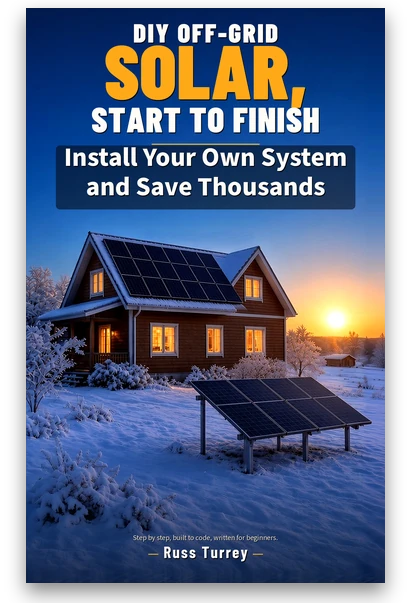
New book:
DIY Off-Grid Solar, Start to Finish.
Off-grid only, written for beginners who want to do the work carefully.
Kindle, $4.99 through New Year's: instant digital download. Paperback, $29.99: 370+ pages, 120+ diagrams, full-size 8.5 x 11 printed copy.